
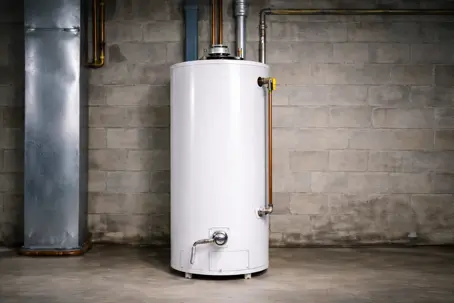
How Long Do Hot Water Tanks Last in Edmonton?
If you are wondering whether your hot water tank is nearing the end of its life, you are asking the right question.
Most homeowners only think about their hot water tank when it stops working. By then, replacement becomes urgent.
Understanding the typical lifespan of a hot water tank in Edmonton can help you plan ahead and avoid emergency failure.
Average Lifespan of a Hot Water Tank
In general, traditional hot water tanks last:
8 to 12 years.
Some systems fail earlier. Others may last slightly longer with proper maintenance.
However, lifespan depends heavily on climate, water quality, usage patterns, and installation quality.
In Edmonton, climate plays a major role.
Why Edmonton’s Climate Matters
Edmonton has long, cold winters and very cold groundwater temperatures.
Cold incoming water forces the tank to work harder to heat water to the desired temperature.
This increased workload accelerates wear on:
- Heating elements
- Burners
- Internal tank lining
- Anode rods
Over time, this added strain can shorten lifespan compared to warmer regions.
Gas vs. Electric Lifespan
There is not a dramatic difference in lifespan between gas and electric tanks when installed correctly.
Both typically fall within the 8 to 12 year range.
However, gas systems often recover faster, which can reduce prolonged strain during heavy usage.
Electric tanks may experience element burnout sooner if sediment accumulates.
Maintenance plays a larger role than fuel type.
The Role of Sediment Buildup
Sediment is one of the biggest factors affecting tank lifespan.
Minerals naturally settle at the bottom of the tank over time.
If not flushed periodically, sediment can:
- Reduce efficiency
- Cause overheating
- Create internal stress
- Accelerate corrosion
Excess sediment is one of the leading causes of premature failure.
Annual flushing can help extend lifespan.
The Anode Rod Factor
Most homeowners have never heard of the anode rod.
The anode rod is designed to corrode instead of the tank itself. It protects the internal lining from rust.
Once the anode rod is fully depleted, corrosion begins attacking the tank.
If the rod is replaced before full depletion, lifespan can sometimes be extended.
However, most homeowners never inspect or replace it.
Warning Signs a Tank Is Nearing the End
Even if your tank is not leaking yet, these signs may indicate it is approaching failure:
- Rust-coloured water
- Rumbling or popping noises
- Inconsistent hot water
- Moisture near the base
- Metallic smell
- Rising utility bills
If your tank is over 10 years old and showing any of these symptoms, replacement planning should begin.
Should You Replace at 10 Years?
Many professionals recommend proactive replacement once a tank reaches 10 years of age.
Why?
Because the risk of rupture increases significantly beyond that point.
Waiting for total failure can lead to:
- Basement flooding
- Property damage
- Emergency installation premiums
Replacing before failure allows you to compare options calmly and schedule installation at your convenience.
What Happens When a Tank Fails
When a tank ruptures, it can release 40 to 75 gallons of water quickly.
Water damage can affect:
- Flooring
- Drywall
- Stored belongings
- Electrical systems
Insurance claims for water damage often exceed the cost of replacement many times over.
Proactive replacement is often the safer financial decision.
Can a Tank Last 15 Years?
Yes, but it is not common.
A tank may exceed 12 years if:
- It has been maintained regularly
- Sediment has been flushed
- The anode rod was replaced
- Usage has been moderate
- Installation was done properly
However, once a tank reaches 12 years, failure risk increases rapidly.
When It Makes Sense to Upgrade
If your tank is nearing the end of its lifespan, this may also be the right time to consider:
- Increasing tank size
- Upgrading efficiency
- Switching to tankless
- Improving venting systems
Replacement provides an opportunity to optimize your system.
The Bottom Line
In Edmonton, most hot water tanks last between 8 and 12 years.
Cold climate conditions and groundwater temperature increase strain on systems over time.
If your tank is approaching 10 years old, planning replacement before failure is typically the safest and most cost-effective strategy.
Waiting often leads to higher stress and higher cost.
Need Help Evaluating Your Tank?
If you are unsure how old your tank is or whether it is nearing failure, a professional inspection can provide clarity.
A qualified technician can assess condition, check components, and recommend whether repair or replacement makes sense.
Understanding your system’s lifespan today can prevent major problems tomorrow. Contact us today!