
Signs You Need a New Hot Water Tank in Edmonton
Hot water tanks rarely fail without warning. The challenge is that many homeowners do not recognize the signs until the situation becomes urgent.
Everything may seem normal one day, then suddenly you are dealing with cold water or unexpected moisture around the tank.
Understanding the early indicators of failure can help you avoid costly water damage and the stress of an emergency replacement.
Here are the most important signs Edmonton homeowners should never ignore.
Your Tank Is Over 8 to 12 Years Old
Age is one of the strongest predictors of hot water tank failure.
Most traditional tanks last between 8 and 12 years. Edmonton’s cold groundwater forces systems to work harder throughout the year, which can shorten that lifespan.
If your tank is approaching the ten-year mark, it is wise to begin planning for replacement even if the unit appears to be functioning properly. Waiting for failure is rarely the most affordable option.
Manufacturers include a serial number on every tank that identifies the production date. Many homeowners are surprised to discover their system is older than expected.
Rust Colored Water
Turn on your hot water tap and check the clarity of the water.
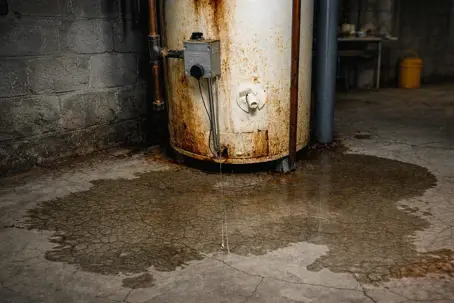
If you notice a brown, reddish, or metallic tint, corrosion may already be forming inside the tank. Once internal rust begins, the structural integrity of the unit weakens and the likelihood of leaks increases significantly.
Internal corrosion cannot be reversed. At this stage, replacement is typically the safest long-term decision.
Rumbling or Popping Sounds
A properly functioning hot water tank operates quietly. Unusual noises such as popping, cracking, or rumbling often indicate sediment buildup.
Minerals naturally settle at the bottom of the tank over time. As the layer thickens and hardens, the burner must work harder to heat the water. This creates excess heat and places stress on the metal.
Over time, this can lead to tank fractures, reduced efficiency, and premature failure. These sounds are often dismissed by homeowners but are considered a serious warning sign by HVAC professionals.
Water Around the Base of the Tank
Even a small amount of moisture should never be ignored.
Tiny fractures can expand as the tank repeatedly heats and cools. What begins as a slow drip can quickly escalate into a rupture that releases dozens of gallons of water into your home.
If you notice pooling water near the tank, contact a professional immediately. Leaks rarely resolve on their own.
Inconsistent Water Temperature
If your hot water suddenly turns cold during use, internal components may be failing.
Common causes include heating element damage, burner problems, sediment interference, or thermostat issues.
While certain parts can be repaired, recurring temperature fluctuations often signal that the tank is approaching the end of its service life. A professional inspection can help you avoid investing in repairs for a system that may not last.
Rising Energy Bills
Older tanks gradually lose efficiency. Because the change happens slowly, the increased cost often goes unnoticed.
Sediment buildup and aging components force the system to consume more energy to deliver the same level of performance. Upgrading to a modern high-efficiency tank can reduce monthly utility expenses and improve overall reliability.
Over time, those savings can be substantial.
Running Out of Hot Water Faster
If your household usage has remained consistent but your hot water supply seems to disappear quickly, the tank may no longer be operating at full capacity.
Sediment accumulation reduces the amount of usable water inside the tank. A system labeled as fifty gallons may deliver significantly less once buildup occurs.
This issue is especially common in older units.
Why Waiting Can Become Expensive
Many homeowners attempt to extend the life of their hot water tank for as long as possible. While understandable, the financial risk is often underestimated.
A ruptured tank can release between forty and seventy-five gallons of water within minutes. This can damage flooring, drywall, furniture, storage areas, and electrical systems.
Water damage restoration frequently exceeds ten thousand dollars. Replacing a tank before it fails is almost always more cost-effective than repairing a flooded basement.
Repair or Replace: How to Decide
A widely accepted guideline is simple. If a repair costs more than fifty percent of the price of a new tank, replacement is usually the smarter investment.
Repairs do not reset the lifespan of the system. One component may be fixed only for another to fail months later.
A new installation provides warranty protection, improved efficiency, stronger reliability, and greater peace of mind. For tanks nearing the end of their service life, replacement is often the safer financial decision.
Edmonton Homes Place Greater Demand on Hot Water Tanks
Local climate plays a larger role than many homeowners realize.
Cold incoming water requires more energy to heat, particularly during long winters. This increased workload accelerates wear on the system.
Seasonal demand also rises during colder months when hot showers and household usage increase. As a result, hot water tanks in Edmonton often experience more strain than those in milder regions.
Planning ahead is essential.
Should You Replace Your Tank Before It Fails?
HVAC professionals strongly recommend proactive replacement once a tank approaches the end of its expected lifespan.
Benefits include avoiding emergency installation premiums, allowing time to compare equipment options, scheduling service at your convenience, and reducing the risk of water damage.
Emergency replacements tend to be more stressful and often more expensive.
Choosing the Right Replacement Tank
When it is time to upgrade, proper sizing is critical.
A tank that is too small can lead to frequent hot water shortages, while an oversized unit may increase energy costs unnecessarily.
Most Edmonton households perform well with a fifty-gallon tank, though larger families may require additional capacity. An experienced installer can recommend the best system based on your household’s water usage.
When to Call a Professional Immediately
Contact a professional right away if you notice active leaking, metallic-smelling water, loud rumbling, sudden loss of hot water, or visible corrosion.
These symptoms often indicate that failure is approaching. Acting early helps protect your home from more significant damage.
The Bottom Line
Hot water tanks almost always provide warning signs before failing, but those signals are easy to overlook without the right knowledge.
If your system is aging or showing any of these symptoms, scheduling an inspection is one of the smartest preventative steps you can take. Early action can help you avoid emergency costs, water damage, and unexpected disruption to your home.
Need Expert Advice on Your Hot Water Tank?
If you are unsure whether your system requires repair or replacement, a professional assessment can provide clarity.
An experienced technician can evaluate your tank, recommend the appropriate size, provide transparent pricing, and help you plan ahead before failure occurs.
Booking an inspection today could prevent a much larger problem tomorrow.